

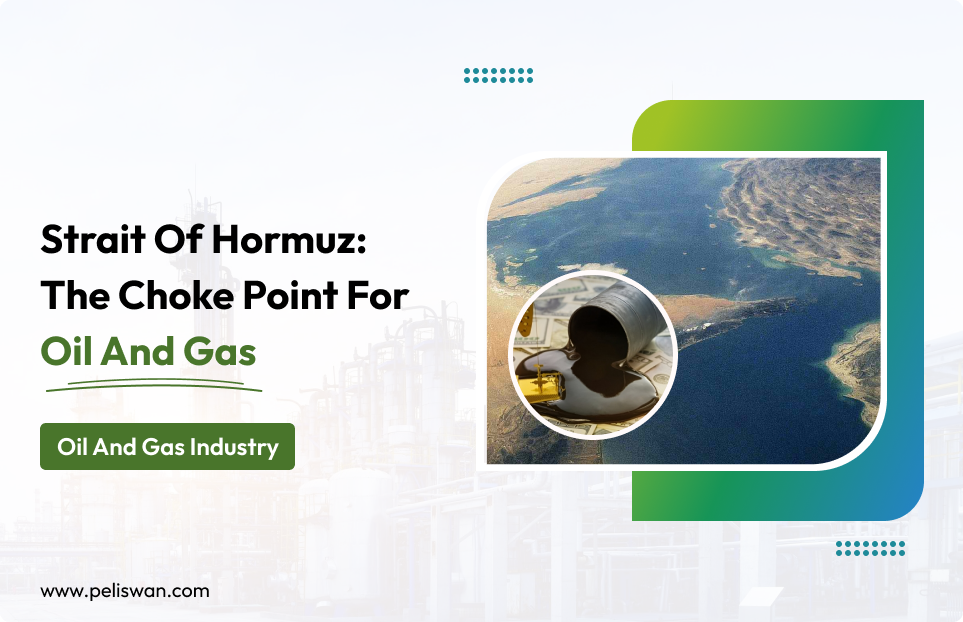
The Strait of Hormuz is one of the most strategically important waterways in the world and is widely regarded as the most critical chokepoint for global oil and gas transportation. It is the only sea channel linking the oil-rich Persian Gulf (west) with the Gulf of Oman and the Arabian Sea (southeast). More than 20 percent of global oil and liquified natural gas exports passes through the strait, which serves as the primary route for petroleum exported from Iran, Iraq, Kuwait, Qatar, and the UAE.
The exports are geographically focused—about four-fifths go to importing countries in Asia, especially India, China, Japan and South Korea—but the volume of the supply has a profound impact on pricing worldwide due to the low elasticity of prices for petroleum products. Along with the Strait of Malacca that connects the Indian Ocean to the Pacific Ocean the Strait of Hormuz is one of the most vital oil chokepoints in the global economy.
The strait is 35 to 60 miles (55 to 95 km) wide and separates Iran(north) from Oman’s Musandamexclave on the Arabian Peninsula(south). Oil tankers pass through the strait in inbound and outbound shipping lanes that are 2 miles (3 km) in width and separated by a two-mile buffer zone. The shipping lanes lie mostly in Omani territorial waters and somewhat in Iranian territorial waters, but they are governed by international maritime law and according to the United Nations Convention on the Law of the Sea(UNCLOS). Iran controls the strait north of the shipping lanes and Oman controls the strait to the south. Despite its relatively small width, the strait plays a crucial role in the global energy supply chain because a large share of the world’s crude oil and liquefied natural gas passes through it every day. As a result, any disruption in this region has the potential to affect global energy markets, international trade, and economic stability. Although Iran has the capacity to disrupt shipping, most of the strait is deep enough (200 to 330 feet [60 to 100 meters]) to handle oil tankers and Iran does not have the ability to block the entire width of the strait for a prolonged period of time.
The importance of the Strait of Hormuz is not limited to oil alone; it is also a vital route for natural gas shipments, especially liquefied natural gas (LNG). Countries like Qatar are among the world’s largest exporters of LNG, and much of their production travels through the strait to reach energy-hungry markets in Asia and Europe. Major importing countries such as China, India, Japan, and South Korea rely heavily on energy supplies transported through this passage. Because of this dependence, the strait plays a central role in global energy security.
One of the key reasons the Strait of Hormuz is considered a chokepoint is its vulnerability to geopolitical tensions. The Middle East has historically been a region of political conflicts and strategic rivalries, and the strait lies at the center of these dynamics. Iran, which controls the northern coastline of the strait, has frequently been involved in disputes with Western countries and regional powers. During periods of political tension, Iranian leaders have sometimes threatened to close or restrict access to the strait. Such threats immediately create concern in global markets because any interruption in oil shipments could lead to supply shortages and higher energy prices worldwide.
The strategic importance of the Strait of Hormuz has also prompted major global powers to maintain a military presence in the region. The United States, along with several allied countries, regularly deploys naval forces to patrol the waters and ensure freedom of navigation. These operations are intended to deter potential threats and maintain the steady flow of oil and gas shipments. Without such security measures, the risk of disruptions could increase significantly, leading to instability in global energy markets.
Recognizing the vulnerability of the Strait of Hormuz, some oil-producing countries have developed alternative export routes to reduce dependence on this chokepoint. For example, Saudi Arabia has constructed pipelines that transport oil to ports on the Red Sea, allowing shipments to bypass the strait. Similarly, the United Arab Emirates operates pipelines that connect its inland oil fields to the port of Fujairah on the Gulf of Oman. These alternatives provide some flexibility, but they cannot fully replace the enormous capacity of the Strait of Hormuz, which continues to handle the majority of energy exports from the Persian Gulf.
In addition to geopolitical risks, the concentration of shipping traffic in the strait presents logistical challenges. Hundreds of large oil tankers pass through the region each year, and the narrow navigation channels require careful coordination to avoid accidents or congestion. Any maritime accident, such as a collision or a grounded tanker, could temporarily block the passage and disrupt energy transportation.
The global economy remains highly dependent on fossil fuels, and the Strait of Hormuz plays a central role in ensuring that these resources reach international markets. Energy prices, industrial production, transportation systems, and economic growth in many countries are closely linked to the stability of this maritime corridor. Because of its significance, policymakers, energy companies, and international organizations closely monitor developments in the region.
Why is the Strait of Hormuz Critical for India?
India is significantly dependent on the Strait of Hormuz for its energy supplies, especially oil, liquefied natural gas (LNG), and liquefied petroleum gas (LPG). Because India imports most of its energy, disruptions in this narrow maritime route can have major economic and strategic consequences for the country.
Below is a clear explanation of how much India depends on the Strait of Hormuz for oil and gas.
1. Dependence on Crude Oil
India is one of the world’s largest oil importers and relies heavily on foreign supplies.
• India imports about 85–90% of its crude oil requirements from abroad.
• Around 40–42% of India’s crude oil imports pass through the Strait of Hormuz.
These supplies mainly come from Gulf producers such as: Saudi Arabia, Iraq, Kuwait, United Arab Emirates
These countries export oil from the Persian Gulf, and most tankers must pass through the Strait of Hormuz before reaching the Arabian Sea and then India.
Implication:
If the Strait of Hormuz is blocked or disrupted, nearly half of India’s oil imports could be affected.
2. Dependence on Natural Gas (LNG)
India also depends heavily on imported natural gas.
• About 45–50% of India’s natural gas consumption is met through LNG imports.
• Nearly 60–70% of India’s LNG imports are linked to the Strait of Hormuz.
The largest supplier is:
• Qatar (providing roughly 40–45% of India’s LNG imports).
A disruption in Hormuz could significantly affect India’s gas supply, impacting power generation, fertilizers, and industrial production.
3. Dependence on LPG
India’s dependence is even higher for LPG (used in household cooking).
• India imports over 60% of its LPG needs.
• Up to 80% of LPG imports come from Gulf countries, mainly: Qatar,Saudi Arabia,United Arab Emirates,Kuwait
Since these exports originate in the Persian Gulf, most LPG shipments also transit the Strait of Hormuz.
4. Trade Dependence Beyond Energy
The importance of the strait is not limited to hydrocarbons.
This includes imports of: petrochemicals, fertilizers, metals, industrial raw materials
India’s Efforts to Reduce Dependence on Gulf Countries for Oil and Gas
For decades, India has relied heavily on energy imports from Gulf countries such as Saudi Arabia, Iraq, Kuwait, Qatar, and the United Arab Emirates. Much of this energy supply travels through the strategically important Strait of Hormuz, making India vulnerable to geopolitical tensions and supply disruptions in the region.
Diversification: One of the most significant steps taken by India is the diversification of crude oil import sources. However, in recent years India has expanded its imports from countries outside the Gulf region. For example, India has increased oil purchases from Russia. Additionally, India has strengthened energy trade with the United States, which has emerged as an important supplier of both crude oil and liquefied natural gas (LNG). Other countries such as Brazil, Nigeria, and Mexico have also become part of India’s diversified energy import network.
Strategic Petroleum Reserves (SPR):India has established large underground oil storage facilities to ensure emergency supplies in case of disruptions in international markets. These reserves allow the government to store millions of barrels of crude oil that can be used during crises such as wars, natural disasters, or supply blockages. Strategic petroleum reserves have been developed in locations such as Visakhapatnam, Mangaluru, and Padur.
Energy transition and renewable energy development: India is also focusing on energy transition and renewable energy development as part of its long-term strategy. The country has made major investments in solar, wind, and other renewable energy sources.
Promotion of alternative fuels and energy efficiency: Another important initiative is the promotion of alternative fuels and energy efficiency. India is encouraging the use of biofuels, ethanol blending in petrol, electric vehicles, and green hydrogen technologies. These measures aim to reduce oil consumption in sectors such as transportation and industry. By lowering overall demand for imported oil, India can reduce its dependence on Gulf suppliers and strengthen energy security.
Although Gulf countries will remain important energy partners for the foreseeable future, India’s proactive policies are gradually reducing its vulnerability to regional disruptions and strengthening its position in the global energy landscape.
